
The Cumulus conference in Nantes about the Ethical Leadership
In June 2025, L'École de design Nantes Atlantique had the honor of hosting more than 500 schools, researchers, and designers from 60 countries to attend the Cumulus World Conference, "Ethical Leadership: A New Frontier for Design." Through six major themes, Cumulus 2025 aims to explore new frontiers in design responsibility. Each theme invites participants to rethink their practices and their global impact.
By hosting Cumulus in 2025, L’École de design Nantes Atlantique has reaffirmed its longstanding commitment to socially conscious design that is open to the world and resolutely forward-looking.
An active member of the Cumulus network for over twenty-five years, the school embodies a commitment to using design as a catalyst for social change.
Founded in 1988, the L’École de design Nantes Atlantique is dedicated to training professionals capable of devising sustainable, desirable solutions that address ethical and environmental concerns.
Its educational approach is based on three key pillars:
- Transdisciplinarity, to bring together different areas of expertise and break down barriers between practices,
- Responsible innovation, for developing projects with a positive impact,
- An international focus, to prepare students for the realities of a globalized and multicultural world.
Cumulus Conference Proceedings
The proceedings of the conference “Ethical Leadership: A New Frontier for Design” were published in April 2026. They bring together 189 papers that contribute to the discussion on the responsibilities, methods, and new areas of action for design in a changing world.
5 Design Labs to explore the major challenges of our time
Serving as true incubators for ideas and projects, the school’s Design Labs enable students, researchers, teachers, and industry partners to collaborate on complex challenges.
Each Design Lab is dedicated to a major global transition:
- Care Design Lab (design and care)
- City Design Lab (urban planning and regional development)
- Food Design Lab (food transitions)
- Media Design Lab (media and digital innovation)
- Digital Design Lab (AI, XR, Digital Ethics)
Digital Ethics: Designing in a Data-Driven World
Given the rapid rise of artificial intelligence, digital platforms, and virtual environments, how can we ensure that technological development respects human rights, transparency, and cultural diversity?
This theme explores the role of design in regulating digital practices and creating ethical and inclusive interfaces.
"The “Digital Ethics” track invites designers, researchers, and technologists to critically examine the impact of digital technologies - particularly artificial intelligence - on social values, identities, and possible futures. It highlights design’s responsibility to question, anticipate, and redirect technological trajectories toward ethical, inclusive, and human-centered outcomes." Frédérique Krupa, Director of the school's Digital Design Lab.
Food transition: rethinking our production and consumption systems
In the face of the climate emergency and food security challenges, design must play a role in reinventing the food supply chain, from farm to table. Products, services, business models: how can we support new, more sustainable and equitable eating habits for everyone?
"Designers must play a crucial role in transforming attitudes toward food consumption and production by embracing a sense of calm around food as a call for balance between individual well-being and collective environmental and social responsibility." Julia Kunkel, Director of the school's Food Design Lab.
Public Innovation and Care: Putting Citizens First
The ability of public services to transform themselves is now a major democratic issue. Design, as a tool for mediation and innovation, can revitalize public action around the concepts of care, inclusion, and equity. How can we develop public policies that are more humane, more accessible, and more responsive?
"Environmental and social imperatives, along with the responsibility to design for the real world, have long guided the work of social and public designers. Today, as design for public policy embraces a more flexible approach centered on life courses, new demands are being placed on public designers: a deeper understanding of political science, economics, and public law." Clémence Montagne, Director of the school's Care Design Lab.
Regenerative Cities: Toward Sustainable and Vibrant Communities
Beyond the sustainable city, the concept of the regenerative city invites us to envision urban environments that restore biodiversity, repair ecosystems, and promote human health. What role can design play in shaping landscapes capable of regenerating themselves and supporting future generations?
"From targeted design to holistic design, from participatory to integrative, the design of cities and regions is undergoing a profound transformation - not only to rethink products, services, and spaces, but also strategies, decision-making processes, and ecosystems, by including all living beings, both human and non-human." Sophie Eberhardt, Director of the school's City Design Lab.
Media and Information: Safeguarding Integrity in the Post-Truth Era
In an age of misinformation and recommendation algorithms, ethical responsibility in media design has become crucial. How can design help rebuild trust, foster critical thinking, and promote the free and informed flow of information?
"Information is a driving force in our society. It shapes our debates and our democracies. For many decades, we believed that more information would lead to greater democratic wisdom. Yet the age of social media shows us the opposite: information is becoming a disruptive force in our democratic lives. Addressing this issue is essential for the future of our societies. Designers have the potential to play a role just as decisive as that of journalists in the production and processing of information. " Karl Pineau, Director of the school's Media Design Lab
Design-Driven Entrepreneurship: Embracing Responsible Business Models
Faced with the limitations of the traditional business model, designer-entrepreneurs are reinventing businesses that have a positive impact. How can we foster a culture of socially responsible innovation that combines performance with social and environmental responsibility? What new approaches to design management can support this shift?
"Designers must fully commit to addressing climate crises by taking on responsibilities that demand more than just creativity - they call for ethical clarity, intercultural competence, and a strong entrepreneurial spirit. This program invites participants to explore in greater depth how design-driven entrepreneurship requires cultivating ethical leadership in the service of a sustainable future." Joseph Press, Professor and Vice Dean of NACAA (Nantes Atlantique China Academy of Art).
Highlights of the program
June 4, 2025
- Opening ceremony and signing of the 2025 edition of the Cumulus Declaration, a manifesto reaffirming design schools’ commitment to ethical values and responsibility.
June 5, 2025
- Cumulus Conversations: These discussions brought together researchers, educators, design professionals, and business representatives to explore the role of design in addressing major contemporary challenges such as climate change and the rise of artificial intelligence. The goal was to consider how design can serve as a catalyst for transformation in shaping sustainable, inclusive, and ethical futures.
"
Cumulus Conversations is a collective opportunity to reflect, without complacency, on what design can -and must - do in a world transformed by AI, systemic crises, and environmental emergencies.
"

"Cumulus Conversations is a collective opportunity to reflect, without complacency, on what design can - and must - do in a world transformed by AI, systemic crises, and environmental emergencies.
It’s no longer about nice ideas, but about evidence: evidence that strategic design matters, that designers can become systemic agents, that uncertainty is fertile ground for creating value, that our approach to teaching must evolve, and that AI must be designed, not just used.
With over 500 participants, this event is a call to action. It is up to us to cross the threshold—lucid, committed, and strategic."
Florent Orsoni, Director of Prospective and Professional Development at the school.
Spotlight on the closing event on June 5: “EPILOGUE: DESIGN THE FRENCH WAY! From the Olympics to Notre-Dame — 2024 Icons,” featuring:
- Mathieu Lehanneur, designer of the torch and cauldron for the Paris 2024 Olympic and Paralympic Games
- Ionna Vautrin, designer of the chairs at Notre-Dame de Paris
- Aurélien Meyer, co-founder of Atelier Blam, who designed and built Zeus, the mechanical horse for the opening ceremony of the 2024 Paris Olympics
- Exhibition of the 40 nominated projects at the France Design Impacts Awards – out of 100 projects submitted – 10 of which were awarded prizes in September 2025 at the France Design Week. The 2025 France Design Impact Award recognized a wide range of projects, with a particular focus on design’s contribution to major societal, environmental, and economic challenges.
The evaluation process was based on three key areas: environmental impact, economic impact, and societal impact, as well as the overall scope and future potential of the proposed project.
Plusieurs intervenants de renom ont marqué ce colloque :
- Cynthia Fleury, a philosopher known for her work on ethics and care
- Federico Casalegno, Executive Vice President of Design at Samsung Electronics
- Gjoko Muratovski, expert in innovation and industrial policy
- Sihem Jouini, specialist in integrating design into organizations
- Fabien Grégoire, head of experience at Saint Gobain and graduate of the school (2021)
- Marc Antoine Dilhac, philosopher and expert on ethical issues related to AI
- Antoinette Lemens, HR consultant specializing in the recruitment of top-tier designers
Nantes, a global hub for ethical design
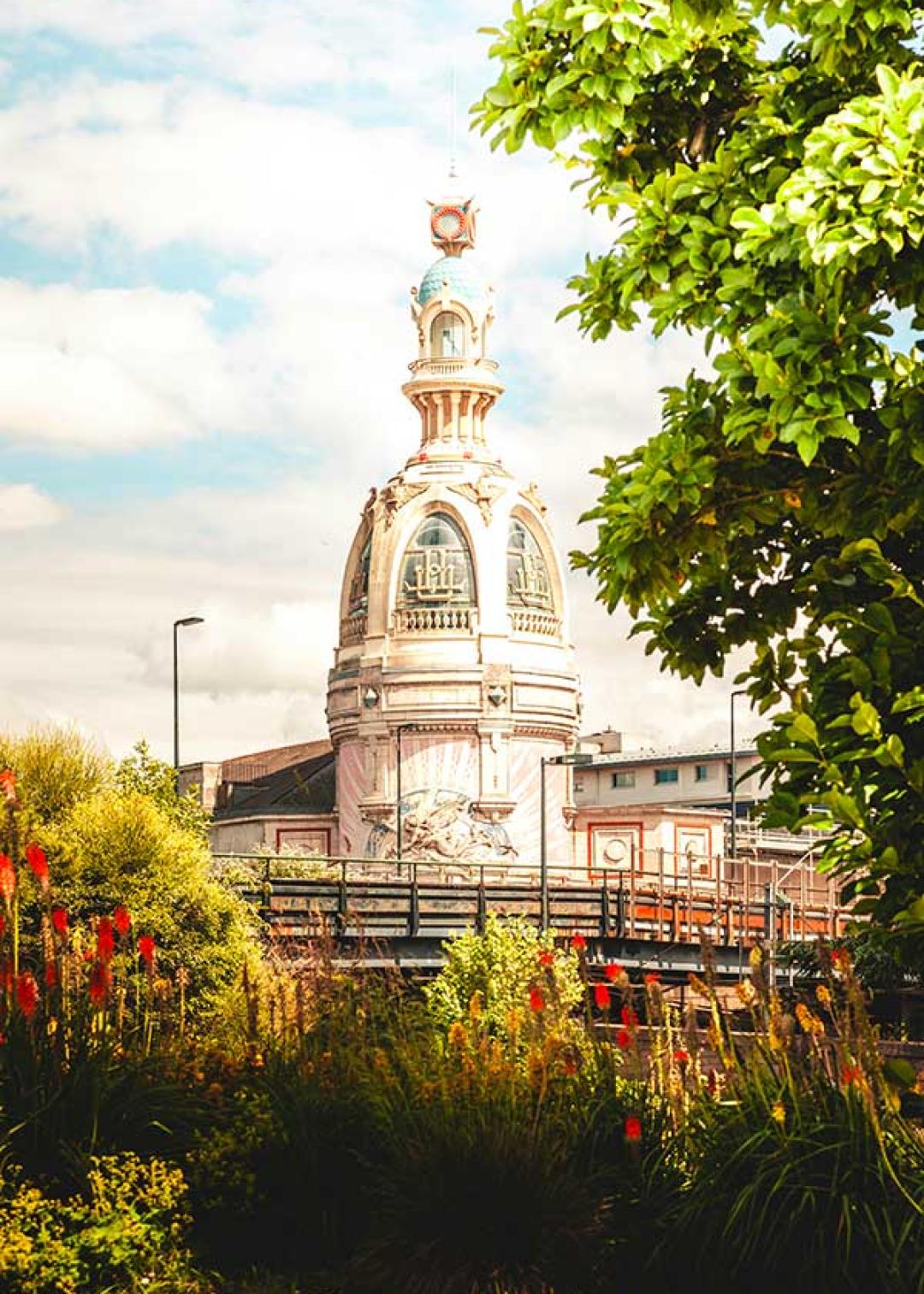
By hosting Cumulus 2025, Nantes has reaffirmed its position as one of Europe’s most dynamic cities in the fields of innovation, design, and sustainability. Chosen for its creative ecosystem, its commitment to ecological and social transitions, and its international outlook, Nantes fully embodies the values championed by this anniversary edition.
Through Cumulus Nantes 2025, the city aims to strengthen its international influence and foster dialogue among design professionals regarding their key role in the emergence of more ethical, creative, and sustainable societies.
"By hosting the Cumulus conference for the second time, nearly twenty years after a landmark inaugural event in 2006, Nantes is more than ever asserting its place among Europe’s leading cities in the field of design. A city of culture, creativity, and innovation, it becomes, for the duration of this event, the beating heart of a global network of higher education in design. This is also a significant recognition for our school, which has placed international engagement at the heart of its strategy." Frédéric Degouzon, Director of International Strategy & Development at L'École de design Nantes Atlantique
Ranked among the “most livable cities in Europe” by the Financial Times and regularly recognized for its innovative public policies (including the title of European Green Capital in 2013), Nantes stands out for its ability to combine creativity, social commitment, and economic development. Its unique ecosystem brings together startups, cultural and creative industries, top-tier academic centers, and citizen-led initiatives working toward a more inclusive and regenerative city.
"
Nantes is more firmly than ever establishing itself as a leading European city in the field of design.
"

Hosting Cumulus in Nantes in 2025 is therefore no coincidence: it is a decision that aligns with the goal of celebrating design as a driving force in transforming the world.
Nantes is the birthplace of major projects that combine design, technological innovation, and social responsibility:
- SAMOA, an urban development agency dedicated to the creative industries on the Île de Nantes,
- Le Quartier de la Création, a laboratory for urban and artistic experimentation,
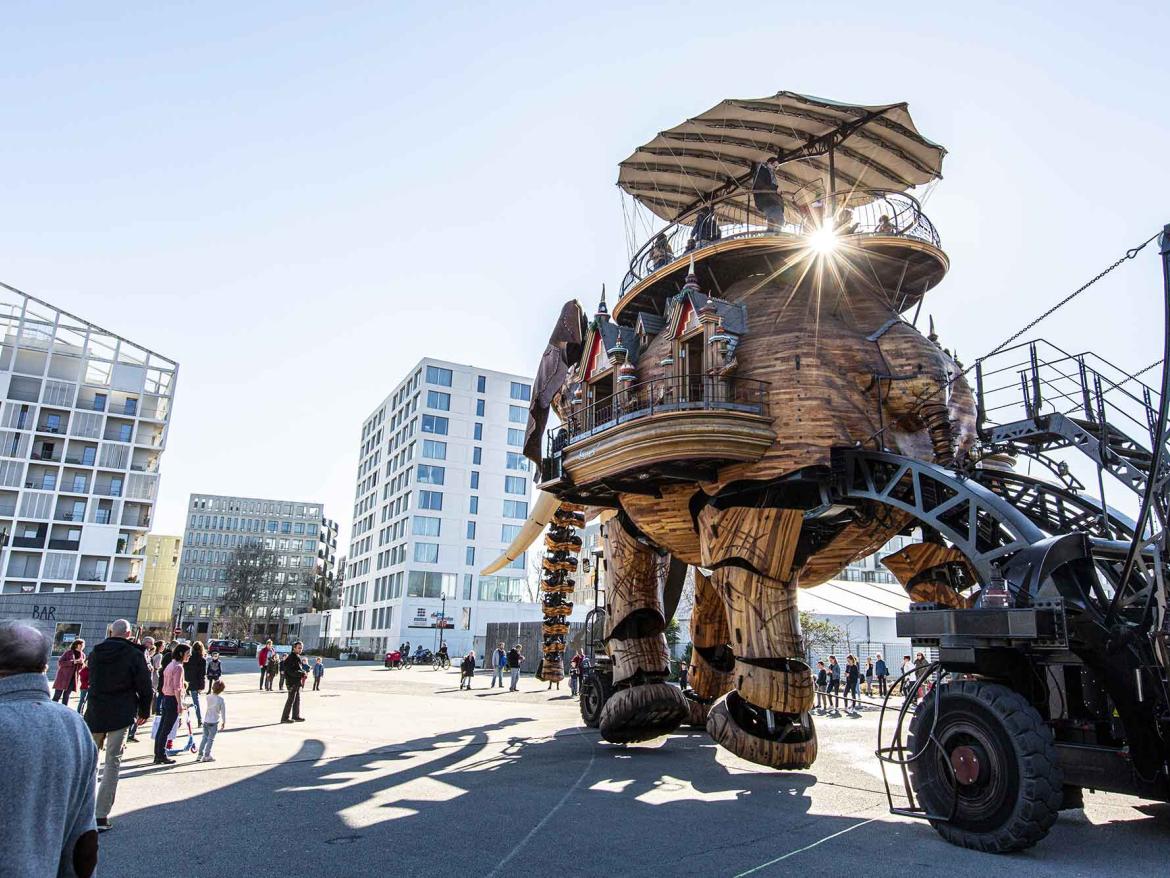
- Les Machines de l’Île, a project in multidisciplinary creation and collective imagination,
- The ecosystem La Cantine, a hub for digital innovation and responsible digital transformation
- Nantes University, the prestigious engineering, management, and design schools, industrial clusters, and local public policies focused on the ecological transition all contribute to this fertile ground for envisioning and experimenting with the future.
In this context, Ethical Leadership: A New Frontier for Design is part of an already vibrant local scene, fostering collaboration among designers, researchers, local governments, entrepreneurs, and engaged citizens.


Partners:
-
- ANdEA (National Association of Art Colleges)
- APCI
- Cité des Congrès de Nantes
- SAMOA
- Sciences du Design
- Stéréolux
- Trempo